

As a supplier of crankshaft bearings for GM engines, I've spent years delving into the intricate details of these crucial components. One often - overlooked yet significant feature is the bearing's chamfer. In this blog, I'll explore the functions of the bearing's chamfer in a GM engine and why it matters for both performance and durability.
Chamfer Basics
Before we dive into the functions, let's briefly understand what a chamfer is. A chamfer is a beveled edge or corner that replaces a sharp 90 - degree angle. In the context of crankshaft bearings for GM engines, chamfers are typically found on the edges of the bearing shells. These chamfers can vary in size and angle depending on the specific engine design and application.
Ease of Installation
One of the primary functions of the bearing's chamfer is to facilitate easy installation. When assembling a GM engine, the crankshaft bearings need to be precisely placed within the engine block and connecting rods. The sharp edges of the bearing without a chamfer could cause alignment issues and make it difficult to slide the bearing into position. The chamfer acts as a guide, allowing the bearing to smoothly enter its designated space. This reduces the risk of damaging the bearing or the mating surfaces during installation. For example, in a complex engine like the ones in GM's luxury vehicles, a misaligned bearing during installation can lead to premature wear and even engine failure. Our LSY Crankshaft Connecting Rod Bearing For GM Enclave CT5 2.0T 55487305 55487314 is designed with optimized chamfers to ensure hassle - free installation.
Oil Flow and Lubrication
Proper lubrication is essential for the smooth operation of any engine, and the chamfer on the bearing plays a role in this aspect. The chamfer helps to direct the flow of engine oil into the bearing clearance. As the engine operates, oil is pumped through the engine block to lubricate the moving parts. The chamfered edges of the bearing allow the oil to enter the bearing more easily, ensuring that a continuous film of lubricant is maintained between the crankshaft journal and the bearing surface. This reduces friction and wear, which in turn extends the lifespan of the bearing and the engine as a whole. In high - performance GM engines, such as those with turbocharged or supercharged configurations, efficient oil flow is even more critical. Our LF1 LLT LP1 Crankshaft Connecting Rod Bearing For GM Cadillac 2.8L 3.6L 12598657 12610603 is engineered to enhance oil flow through its well - designed chamfers, providing superior lubrication in demanding conditions.
Stress Distribution
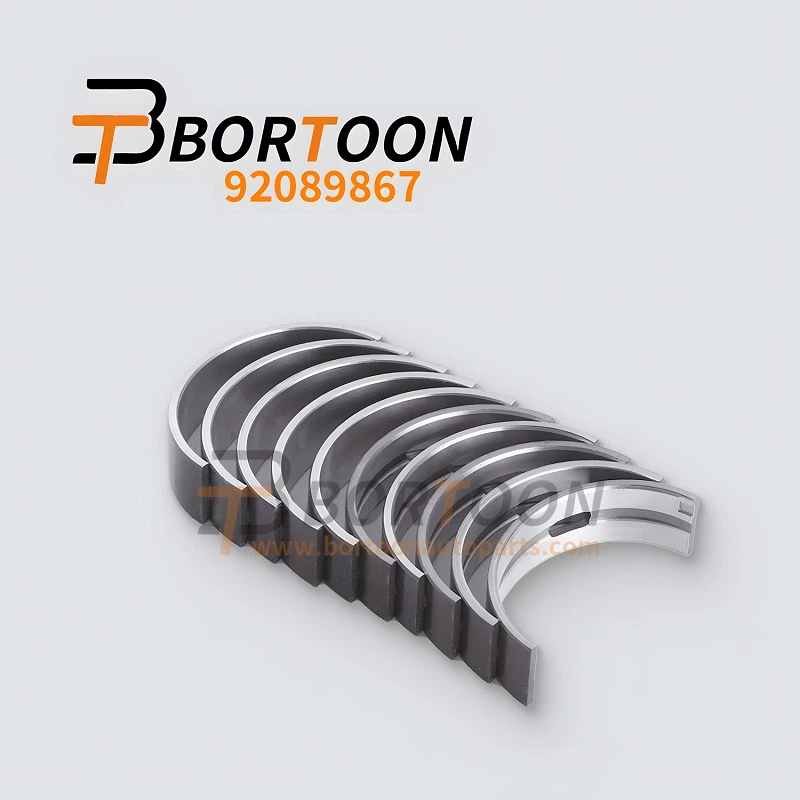
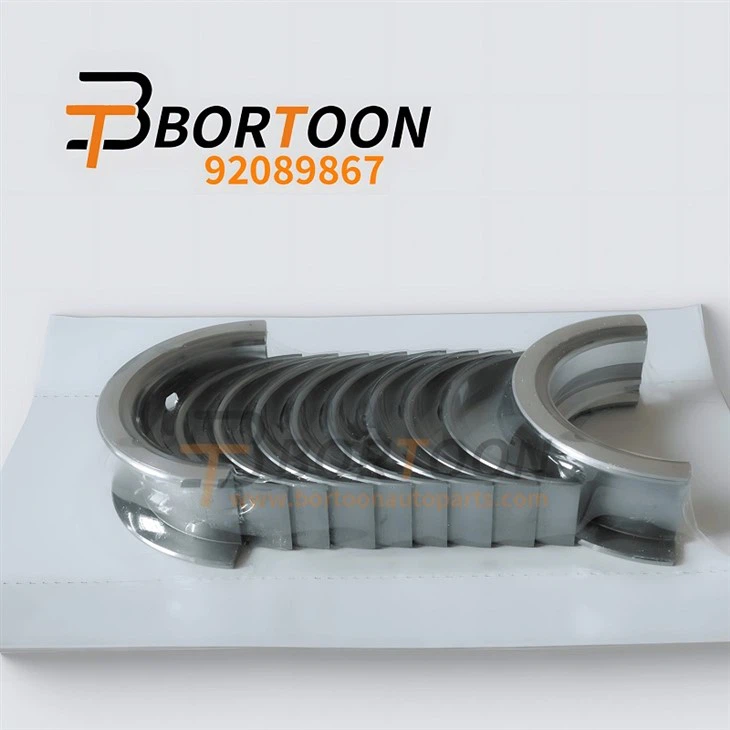
During engine operation, the crankshaft bearings are subjected to significant mechanical stresses. The sharp edges of a non - chamfered bearing can act as stress concentrators, which may lead to cracking or premature failure of the bearing. The chamfer helps to distribute these stresses more evenly across the bearing surface. By gradually transitioning from the edge to the main bearing surface, the chamfer reduces the likelihood of stress concentrations. This is particularly important in engines that operate under high loads or at high speeds, such as those in GM's trucks and performance cars. Our L01 Crankshaft Connecting Rod Bearing for GM Sail 1.6L 92089867 92089865 is designed with chamfers that effectively distribute stress, ensuring reliable performance even in less - than - ideal operating conditions.
Protection Against Debris
Another function of the bearing's chamfer is to protect the bearing from debris. In an engine environment, small particles of dirt, metal shavings, or other contaminants can find their way into the bearing area. The chamfered edges can act as a barrier, preventing these particles from getting trapped between the bearing and the crankshaft journal. If debris were to become lodged in this area, it could cause abrasive wear and damage to the bearing surface. The chamfer helps to guide the debris away from the critical bearing - journal interface, reducing the risk of damage. This is especially important in engines that operate in dusty or dirty environments, such as those used in off - road or industrial applications.
Compatibility with Engine Design
GM engines are designed with specific performance and reliability goals in mind. The bearing's chamfer is an integral part of the overall engine design. Engineers carefully calculate the size, angle, and location of the chamfers to ensure that they work in harmony with other engine components. For example, the chamfers need to be compatible with the oil passages, the crankshaft's rotational dynamics, and the overall bearing load distribution. By adhering to GM's design specifications, our crankshaft bearings provide optimal performance and compatibility with a wide range of GM engines.
Conclusion
In conclusion, the bearing's chamfer in a GM engine serves multiple important functions. From facilitating easy installation to enhancing oil flow, distributing stress, protecting against debris, and ensuring compatibility with the engine design, the chamfer is a small yet crucial feature that can have a significant impact on the performance and durability of the engine. As a supplier of crankshaft bearings for GM engines, we understand the importance of these details. Our products are designed and manufactured with precision to ensure that the chamfers meet the highest standards.
If you're in the market for high - quality crankshaft bearings for GM engines, we invite you to reach out for procurement discussions. We're committed to providing you with the best products and technical support to meet your specific needs.
References
- Automotive Engine Design, by David Crolla
- Fundamentals of Internal Combustion Engines, by John B. Heywood